



Table of Contents
- Does Hangboard Training Actually Build Climbing Stamina
- Hangboarding vs Climbing for Building Endurance
- How Often to Hangboard for Endurance Results
- Hangboard Training for Beginners: Getting Started Safely
- The Real Limits of Hangboard Training for Stamina
- Is Hangboard Training Worth Your Time
- Frequently Asked Questions
Last Updated: October 16, 2026
Does Hangboard Training Actually Build Climbing Stamina
Hangboard training gets a lot of hype in climbing circles. Everyone talks about finger strength and grip endurance.
One is about building your ability to hang longer. The other is about climbing longer routes without pumping out. They're not the same thing.
Let's break down what hangboarding actually does, how it compares to climbing, and whether it deserves a spot in your routine.
What Stamina Means in Climbing
Climbing stamina isn't one thing. It's at least two.
Grip endurance is your ability to hold onto holds for longer periods. Your forearms burn, your fingers tire, and eventually you can't squeeze anymore.
Climbing-specific endurance is different. It's about maintaining your power, technique, and problem-solving ability over multiple pitches or a long boulder session.
Hangboarding trains grip endurance. It doesn't train climbing-specific endurance the same way that actually climbing does.
Hangboarding vs Climbing for Building Endurance
Here's the truth: climbing on routes and circuits builds climbing stamina better than hanging on a board ever will.
When you climb, you're managing multiple demands at once. You're reading the wall. You're moving efficiently. You're resting in good positions. You're solving problems. Your whole body is engaged. Hangboarding isolates your fingers and forearms. That's useful for specific finger strength work, but it's not the full picture of climbing endurance.
Why Routes and Circuits Build Different Stamina
Routes force you to sustain effort across different wall angles and hold types. Your body learns to pace itself. You discover which positions let you recover.
Circuits and 4x4s (four routes climbed four times each) are even better for stamina work. You're climbing continuously. You're managing fatigue across multiple attempts.
Hangboarding can support this work. It can strengthen your fingers so they don't fail you mid-route.
How Often to Hangboard for Endurance Results
If you decide to add hangboarding to your routine, frequency and protocol matter more than most climbers expect.
Most climbers see better results hanging two to three times per week than they do from daily sessions. Your tendons and ligaments need recovery time. Your nervous system needs to adapt. More isn't always better, and for endurance work specifically, the classic mistake is going too hard too often.
The Three Repeater Protocols Worth Knowing
Endurance-focused hangboarding usually means repeaters, repeated hangs with short rest between them. There are three schemes you'll see most often:
- 7:3 repeaters, 7 seconds on, 3 seconds off, repeated 6 times per set. This is the most common entry point. The short rest keeps your forearms under continuous load, which is what trains local endurance rather than raw strength.
- 10:5 repeaters, 10 seconds on, 5 seconds off, repeated 5-6 times per set. Slightly longer hangs, slightly more rest. A good middle ground once 7:3 feels manageable.
- 30:30 repeaters: 30 seconds on, 30 seconds off, repeated 3-5 times per set. This is closer to what a pumpy route actually feels like. It's also the most demanding on your tendons, so it's not a starting point.
Rest 2-3 minutes between sets. Do 3-4 sets total, mixing grip types if you want variety. The whole session takes 20-30 minutes. You're not hanging for hours, you're doing structured work that stresses your system just enough to trigger adaptation.
A Sample Week
Here's how a typical intermediate climber might slot hangboarding in without wrecking their climbing:
- Monday, Climb routes or do a circuit session (main endurance work)
- Tuesday, Hangboard repeaters, 3 sets of 7:3
- Wednesday, Rest or easy climbing
- Thursday, Climb routes or 4x4s
- Friday, Hangboard repeaters, 3 sets of 7:3 or 10:5
- Saturday, Outdoor or gym climbing day
- Sunday, Rest
Notice the hangboard sessions sit next to climbing days, not on top of hard climbing days. If you stack a heavy hangboard session on the same day as a limit bouldering session, you're asking your fingers to recover from two hard stimuli at once. That's how tweaks happen.
Recovery and Avoiding Overtraining
This is where a lot of climbers go wrong. They add hangboarding on top of their normal climbing volume without reducing anything else. Their fingers get angry.
Recovery is where the adaptation happens. Your fingers don't get stronger while you're hanging. They get stronger while they're recovering.
Signs you're doing too much:
- Persistent finger pain that doesn't go away with rest
- Swelling in your fingers or forearms
- Reduced grip strength despite training
- Climbing performance getting worse instead of better
- Waking up with stiff, sore hands
If you see these, back off. Cut your hangboarding frequency in half. Take an extra rest day. Your body is telling you something.
Which Stamina Are You Actually Training?
Here's the part most hangboard guides skip: "stamina" isn't one thing, and repeaters only train one slice of it.
- Local forearm endurance: how long your forearms can keep contracting before they shut down. Repeaters train this directly.
- Power endurance, sustaining near-limit effort for 30 seconds to a few minutes. This is what 4x4s and linked boulder circuits train. Hangboarding helps the finger-strength side of it but misses the movement and pacing side.
- Whole-body aerobic capacity: the ability to keep climbing for hours across pitches. This is built by long routes, mileage days, and general cardio. Hangboarding does almost nothing for it.
If your goal is to stop pumping out on a 25-meter sport route, repeaters are a supporting tool, not the main event. If your goal is to hold a small edge longer on a boulder, repeaters are closer to the point.
Hangboard Training for Beginners: Getting Started Safely
If you're newer to climbing, hangboarding probably isn't where you should start. Seriously.
Your tendons adapt slower than your muscles do. Your climbing technique is still developing. Your body doesn't yet know how to distribute load efficiently. Adding hangboard stress on top of that is a recipe for injury.
The Prerequisites Most Guides Don't Spell Out
Before you touch a hangboard, most experienced coaches suggest you can check off a few boxes:
- You've been climbing consistently for at least 6-12 months. Not casually, regularly, at least twice a week.
- You're climbing around V3-V4 indoors or 5.10-5.11 on routes. This isn't a hard rule, but it's a common threshold where finger strength starts becoming a limiting factor rather than technique.
- Your fingers feel healthy. No lingering tweaks, no nagging pulley soreness, no pain that shows up when you crimp.
- You can already climb a full session without your fingers giving out first. If your forearms pump out before your technique fails, you need more climbing volume, not more finger isolation.
If you can't check those boxes yet, the honest answer is: climb more. Your first year of climbing is the single best finger-strength program you'll ever run, because everything is new stimulus.
Choosing the Right Holds and Grip Types
When you do start hangboarding, hold choice matters.
Open-hand grips are safest for beginners. Your fingers stay relatively straight. Less stress on tendons. This is where you should start.
Half-crimp is the grip most climbers actually use on the wall. It's stronger than open-hand but loads the tendons more.
Full crimp puts the most load on your finger tendons and pulleys.
Edge sizes vary. Bigger edges are easier on your tendons. Smaller edges demand more strength.
Building Your First Endurance Hangboard Routine
Start simple. Here's a beginner-friendly approach:
- Warm up with 10 minutes of easy climbing or dynamic stretching
- Choose open-hand grips only
- Perform 5 sets of: 7-second hang, 3-second rest, repeat 6 times
- Rest 2-3 minutes between sets
- Try a different grip width for your second or third set if you want variety
- Cool down and stretch your forearms
Do this twice per week. Not more. Give yourself at least two days between sessions.
Track how you feel. If your fingers feel good and you're recovering well, you can gradually increase hang duration to 8-10 seconds over several weeks. If anything hurts, back off.
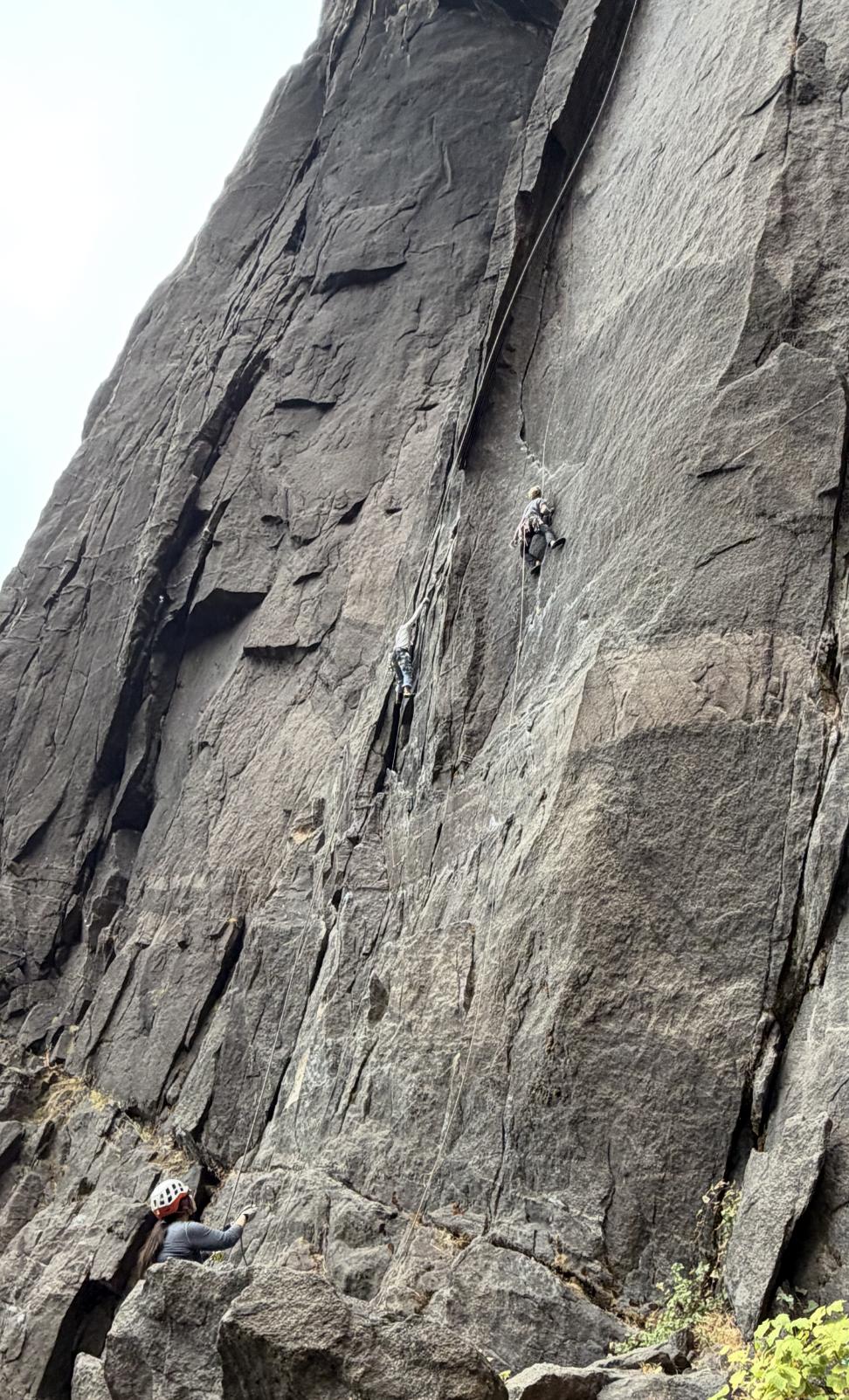
Hangboarding improves finger strength and forearm endurance for rock climbing. Picture taken in Yosemite, Lower Falls area.
A Quick Decision Guide: Hangboard or Climb More?
Not sure if you're ready? Run your situation through this:
- Less than 6 months climbing, still learning technique → Climb more. Skip the hangboard entirely.
- 6-12 months in, climbing V2-V3, fingers feel fine → Climb more, but start reading about hangboarding so you know what's coming.
- 1+ year in, climbing V3-V4, fingers sometimes fail before your body does → A light hangboard introduction (once a week, open-hand only) can help.
- Struggling with pump on long routes, not finger strength → Your problem is endurance, not finger strength. Do circuits and 4x4s. Hangboarding won't fix a pacing problem.
- Fingers feel tweaky, or you've had a pulley injury → Talk to a physio before adding any hangboard work. No exceptions.
Measuring Whether It's Working
One more thing beginners often skip: how do you know if hangboarding is actually helping your stamina?
Hang time alone isn't a great proxy. A better benchmark is a repeatable climbing test, for example, pick a route or circuit at a fixed difficulty and see how many laps you can do before your forearms lock up. Test it every 6-8 weeks under similar conditions.
The Real Limits of Hangboard Training for Stamina
Hangboarding has real limits for building climbing stamina. Acknowledging them matters.
It doesn't train your legs. It doesn't teach you how to rest on the wall.
What it does do is strengthen your fingers and forearms in isolation. That's useful.
The climbers who see the best stamina improvements are the ones who prioritize climbing volume. They climb more routes. They do circuits.
Is Hangboard Training Worth Your Time
The answer depends on your climbing level and your goals.
For beginners: Skip it. Climb more. Let your tendons adapt naturally.
For intermediate climbers: It can help.
For advanced climbers: It's probably part of your routine already. You know how to manage the load.
For everyone: climbing on real walls beats hanging on a board for building actual climbing stamina.
The question isn't really whether hangboard training is worth it.
Frequently Asked Questions
Does hangboard training actually improve climbing stamina?
Hangboard training builds finger and forearm endurance, which is part of climbing stamina. However, it trains a specific type of endurance—static grip holding—not the full-body stamina you develop on real routes. Your forearms will fatigue less quickly on the wall, but hangboarding alone won't teach you how to manage pumped legs, pacing, or breathing during longer climbs. It works best as a supplement to climbing, not a replacement.
How often should you hangboard for endurance results?
Most climbers see benefits from 2-3 hangboarding sessions per week, spaced at least a day apart. Your tendons and connective tissue need recovery time between sessions. Beginners should start with once or twice weekly and gradually increase frequency as their fingers adapt. More than 4 sessions per week raises injury risk without extra gains. Quality and consistency matter more than frequency.
Is hangboarding better than climbing routes for building stamina?
They train different things. Routes and circuits build climbing-specific endurance—your whole body learns pacing, footwork, and movement efficiency under fatigue. Hangboarding isolates finger and forearm endurance in a controlled way. For real climbing stamina, routes are more effective. Hangboarding is best used alongside climbing to target grip endurance specifically and prevent weak fingers from limiting your performance.
Can beginners safely start hangboard training for endurance?
Yes, but carefully. Beginners should start with larger holds, shorter hang durations, and longer rest periods (3-5 minutes between hangs). Begin with just one set per session. Progression should be slow—increase duration or reduce rest gradually over weeks, not days. Listen to your fingers; sharp pain means stop immediately. Building a foundation on real climbing first reduces injury risk significantly.
Climbing stamina takes time to build. The fastest way to improve is to get on the wall and climb consistently. At VIRR Store, we celebrate climbers who show up, put in the work, and push their limits. Our designs are inspired by real climbing stories and real people who've done extraordinary things in the mountains. When you wear VIRR, you're wearing the spirit of stamina, vigor, and the force to keep going, no matter what you're facing.